Stock photo· Jess Loiterton / Pexels

About this event
All types of borosilicate glass manufactured in the Czech Republic.
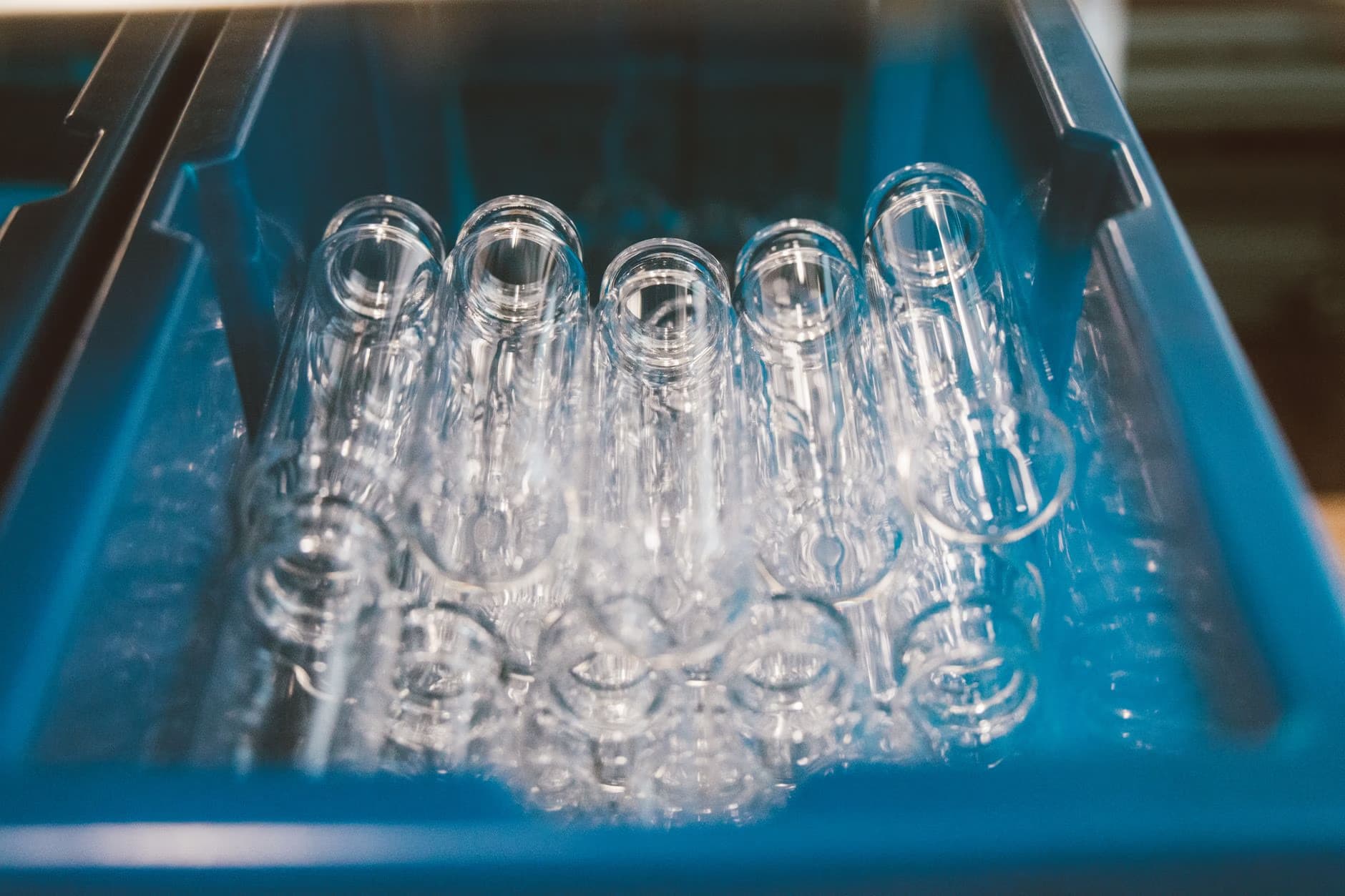
Thanks to its composition and specific properties, borosilicate glass is a material used in several areas of production. Unlike common soda-lime glass, it contains a high proportion of silica and boric oxide. These components give it low thermal expansion, resulting in high resistance to sudden temperature changes. This makes it suitable for producing goods for preparing hot food and drinks, as well as for dining itself. The assortment includes bottles, kettles, carafes, mugs, glasses, jars, pots, and many types of baking dishes. Borosilicate glass is also chemically resistant, hard, strong, and excels in great optical clarity. The combination of thermal and chemical resistance makes it ideal for the production of laboratory and technical glass. Due to its durability and lightness, it is often used in lighting fixtures. Its safety for health contributes to its use in the food industry. Specialties include design accessories and architectural elements, or the production of gift items and unique works of art. The inventor of borosilicate glass was the German chemist Friedrich Otto Schott, who worked on its development at the turn of the 19th century in a laboratory in the German town of Jena. This laboratory became the foundation of today's SCHOTT AG corporation. In the Czech Republic, several companies are involved in processing borosilicate glass from tubes, rods, and profiles, but only the Sázava-based company KAVALIERGLASS, a.s. is involved in the actual production. It has been manufacturing special chemically and thermally resistant laboratory glass since its beginnings in the 1830s. In response to events abroad and customer demand, production processes and glass compositions were constantly being improved. The Sázava glassworks launched its first borosilicate glass on the market in 1923. Development continued. Gradually, during the 1950s, the Czech borosilicate glass compositions SIAL (1951) and subsequently the more perfect SIMAX (1958) were developed and introduced into production. SIMAX has accompanied consumers in various forms to this day. The exhibition Borosilicate Glass will present a representative insight into the current production of four companies - KAVALIERGLASS, DETESK, TECHNOSKLO, and DT GLASS, which, although having different histories, sizes, and partially differing focuses of production, are mutually connected by a passion for working with this unique material. The exhibition is held as part of the International Triennial of Glass and Jewellery Jablonec 2026. The International Triennial of Glass and Jewellery is held under the auspices of: Zuzana Mrázová, Minister of Regional Development of the Czech Republic; Oto Klempíř, Minister of Culture of the Czech Republic; Ministry of Industry and Trade of the Czech Republic; Martin Půta, Governor of the Liberec Region; Miloš Vele, Mayor of the Statutory City of Jablonec nad Nisou; Chamber of Commerce of the Czech Republic; Association of the Glass and Ceramic Industry of the CR; Confederation of Industry of the Czech Republic; Association of Manufacturers of Glass and Jewellery. Project partners: Ministry of Culture of the Czech Republic, Ministry of Industry and Trade of the Czech Republic, Ministry of Regional Development of the Czech Republic, Liberec Region, Statutory City of Jablonec nad Nisou, Chamber of Commerce of the Czech Republic, Confederation of Industry of the Czech Republic, Association of the Glass and Ceramic Industry of the Czech Republic, Messe Frankfurt. General media partner: Czech Television. Media partners: Czech Radio Liberec, Material Times, Sklář a keramik, Designmag
Poster
Dates & Venues
This is a continuous multi-day event